
WELCOME BONUS 300%
UP TO €2000 + 100
FREE SPINS
UP TO €2000 + 100
FREE SPINS
Home → Blackjack
Blackjack at Slotexo Casino: Variants, Rules and Payouts
Place Side Bet before cards are dealt
Side bets are available on various blackjack variants, allowing players to place an additional wager before the cards are dealt. For example, Infinite Blackjack by Evolution offers four side bets: Any Pair, 21+3, Hot 3, and Bust It. These wagers are settled independently of the main hand, providing an extra layer of excitement. The RTP for Infinite Blackjack is listed at 99.47%, but this figure typically applies to the main game and not necessarily to the side bets.
The Quantum Blackjack Plus Live from Playtech features unique 'Quantum multipliers' that can be applied to three-card 21 combinations. These multipliers can reach up to 1,000x, offering potentially significant payouts on a side bet. The game's RTP is stated as 99.57% with optimal strategy. Players should understand that side bets often carry a higher house edge compared to the main blackjack game.
Placing a side bet means committing additional funds before the primary game outcome is known. For instance, Blackjack Insurance, a type of side bet, has a listed RTP of 92.53% and a house edge of 7.47% when offered with 6-8 decks. This is significantly higher than the base game's advantage, so players aiming for optimal returns should exercise caution.
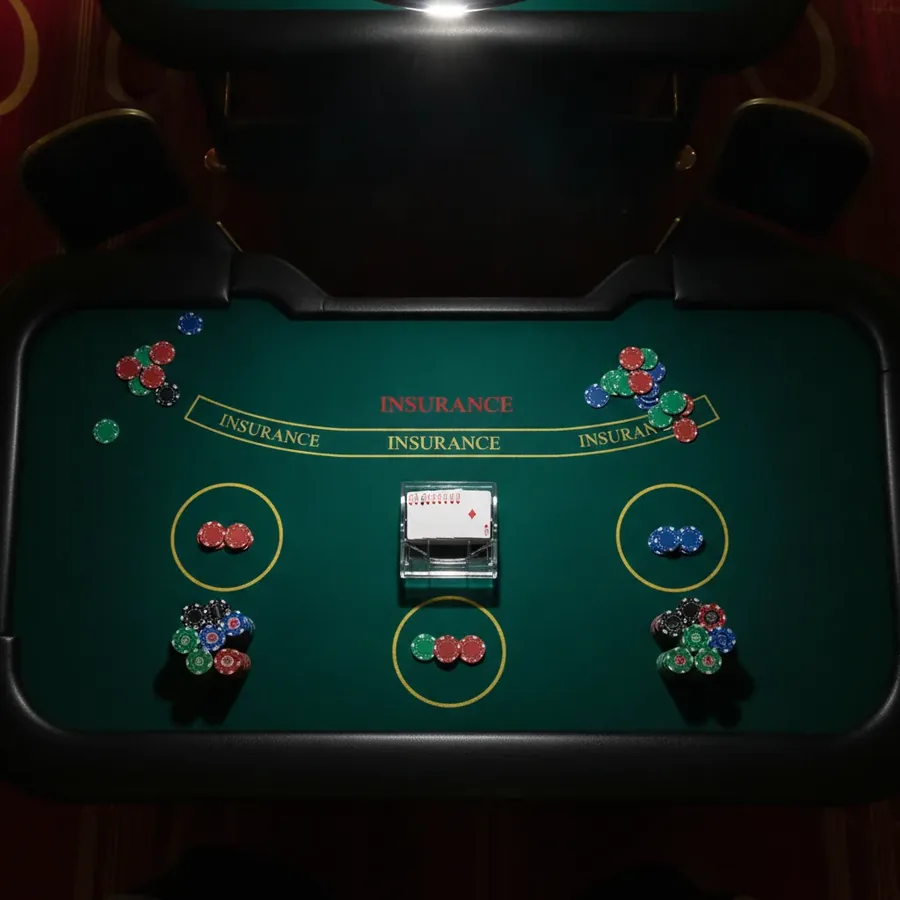
Card Counting at Shuffle Master Table: why it fails
Shuffle Master tables, often employing continuous shuffling machines, present a significant challenge for card counters. These machines are designed to shuffle cards after every hand or very frequently, effectively resetting the count. This constant reshuffling makes it nearly impossible for a card counter to gain a statistical edge by tracking the ratio of high to low cards remaining in the deck.
The fundamental principle of card counting relies on the ability to identify situations where the remaining deck is rich in high cards, which increases the probability of favorable outcomes like blackjacks and player advantages. Continuous shuffling machines, as used in some Shuffle Master setups, eliminate the 'deck penetration' that card counters exploit. The house edge remains consistently high, negating any counting strategy.
While some blackjack variants with fewer decks, like 'Blackjack Ein Deck' with a 0.15% house edge, are theoretically more susceptible to card counting, the implementation of automatic shuffling devices on such tables renders these advantages moot. The advantage gained from a low deck count is effectively nullified by the machine's constant re-shuffling, making it impractical for a player to profit from this technique.
Which rule variants does the software show?
The available software showcases several blackjack rule variants that impact the game's dynamics and house edge. For instance, 'Blackjack Surrender' offers the option for a player to forfeit half their bet after the dealer checks for blackjack, with a house edge reduction of approximately 0.08 percentage points. This variant allows for a strategic retreat in unfavorable situations.
Other important rule variations include dealer actions on soft 17 and splitting/doubling rules. A rule like 'Dealer Hits Soft 17' increases the house advantage by 0.22 percentage points. Conversely, rules such as 'Resplit Aces' (−0.08 percentage points) and 'Double After Split' (−0.14 percentage points) can reduce the house edge. The game 'Blackjack 6 Decks, S17, DAS, DOA, Auszahlung 3:2' demonstrates a combination with a 0.46% house advantage.
The payout for a natural blackjack is a crucial rule variant. While a standard 'Blackjack 3:2' payout offers a better return, a 'Blackjack Auszahlung 6:5' significantly increases the house advantage by 1.39 percentage points. For example, a €100 bet would yield €150 with 3:2 but only €120 with 6:5, highlighting the substantial impact of this rule on player returns.
Highroller from 500 EUR per hand
For high rollers, certain live blackjack tables offer significantly higher betting limits, catering to substantial wagers. Infinite Blackjack and Quantum Blackjack Plus Live, both provided by Evolution and Playtech respectively, allow bets ranging from €1 up to €5,000 per hand. This range provides ample flexibility for players who prefer to stake larger amounts on each round of play.
While the maximum bet on most live blackjack tables is €5,000, the specific game 'Blackjack Party' by Evolution has a slightly lower maximum stake of €1,000 per hand. Despite this, it still accommodates high rollers seeking a more interactive and entertaining blackjack experience with two hosts. The game's focus is on a lively atmosphere alongside the card play.
The option to wager from €500 per hand on tables like Infinite Blackjack or Quantum Blackjack Plus Live means significant capital is at play for high rollers. For example, a player betting €500 on Infinite Blackjack, with its 99.47% RTP, could theoretically see substantial swings in their bankroll over a session. Players should be aware of the bonus wagering contribution, as table games contribute only 10% towards bonus turnover.
Soft Hand and Hard Hand Practically Distinguished
In blackjack, distinguishing between a soft hand and a hard hand is fundamental to applying correct strategy, especially for high rollers managing their wagers. A soft hand contains an Ace that can be counted as either 1 or 11 without the total exceeding 21. For example, an Ace and a 6 form a soft 17 (A=11, 6=6).
A hard hand, conversely, either does not contain an Ace, or it contains an Ace that must be counted as 1 to avoid busting. If a player has a hard 17, it could be 10 and 7, or it could be an Ace, a 5, and a 10 (where the Ace counts as 1). The distinction is critical because players can hit a soft hand without the risk of busting.
For high rollers, understanding this distinction is key to optimizing decisions. For instance, if a dealer shows a 7, and the player has a soft 17, the player might hit, as the Ace can convert to a 1 if the next card is a 5 or higher, preventing a bust. However, if the player has a hard 17, they must stand, as any additional card would result in a bust.
Blackjack variants at a glance
| Variant | Payout | House edge | Rule | Bet range |
|---|---|---|---|---|
| Blackjack Surrender (Late Surrender) – Regel-Effekt | n.a. (Regel-Modifikator) | −0.08 Prozentpunkte | Spieler gibt Hand nach Dealer-Blackjack-Prüfung auf, verliert die Hälfte des Einsatzes. Verbessert RTP um ca. 0.08 Prozentpunkte. Early Surrender ist wesentlich wertvoller (bis −0.6 Prozentpunkte), aber extrem selten. | Rückzahlung 50% des Einsatzes |
| Blackjack Auszahlung 6:5 statt 3:2 (6 Decks) | 98.15% | 1.85% | Ersatz von 3:2 durch 6:5 fügt exakt +1.39 Prozentpunkte zum Vorteil des Casinos hinzu – stärker als jede andere Regeländerung. Bei $10 Einsatz zahlt Blackjack $12 statt $15. | Blackjack 6:5, Gewinn 1:1 |
| Blackjack 6 Decks, S17, DAS, DOA, Auszahlung 3:2, Basisstrategie | 99.54% | 0.46% | Dealer steht auf Soft 17; Verdopplung auf jeder Zweierkarte; Verdopplung nach Split erlaubt; keine Aufgabe. Basisstrategie ist für diesen Wert zwingend | Blackjack 3:2, normaler Gewinn 1:1, Insurance 2:1 |
| Blackjack Ein Deck, klassische Regeln, 3:2 | 99.85% | 0.15% | Weniger Decks = niedrigerer Vorteil; ein Deck gibt ca. −0.48 Prozentpunkte gegenüber 8 Decks. Oft durch 6:5 Auszahlung kompensiert. | Blackjack 3:2, Gewinn 1:1 |
| Blackjack Liberal Vegas Strip (liberale Regeln, 3:2) | 99.72% | 0.28% | Günstigste Regelkombination: S17 + DAS + Resplit + Late Surrender. Standardabweichung 1,15 | Blackjack 3:2, Gewinn 1:1 |
| Blackjack Split / Double / H17 – Regel-Effekte | n.a. (Regel-Modifikatoren) | H17 +0.22 Prozentpunkte; RSA −0.08 Prozentpunkte; DAS −0.14 Prozentpunkte | Dealer Hits Soft 17 verschlechtert RTP um 0.22 Prozentpunkte; Resplit Aces verbessert um 0.08 Prozentpunkte; Double After Split verbessert um ca. 0.14 Prozentpunkte; 6 Decks statt 8 – ca. 0.02 Prozentpunkte. | Double – Einsatz ×2 mit einer Karte; Split – bis 4 Hände; Ass-Split meist mit einer Karte. |
Step-by-step Split at the Live Table
Splitting hands in live blackjack, such as in Infinite Blackjack, allows players to double their potential winnings by creating two separate hands from a pair. This move is available when the first two cards dealt share the same rank, enabling the player to initiate two distinct games from a single initial bet. Following a split, a player receives one additional card for each new hand, with specific rules often dictating further play options.
Certain blackjack variants permit re-splitting Aces, a feature that can be beneficial for high rollers looking to maximize their advantage. The rules for Blackjack Split / Double / H17 indicate that Resplit Aces can improve the RTP by approximately 0.08 percentage points. This means that for every €100 wagered, a player could theoretically see an additional €0.08 returned over the long term.
The ability to Double After Split (DAS) further enhances strategic play for high rollers, offering more flexibility in pursuing favourable outcomes. This rule, present in variations like Blackjack 6 Decks, S17, DAS, DOA, allows players to double down on their hand even after splitting a pair. This capability can significantly alter hand progression, potentially leading to better payouts on hands that would otherwise be limited.
Mobile version needs 1 Mbit bandwidth
Playing live blackjack on a mobile device requires a stable internet connection, with a minimum bandwidth of 1 Mbit recommended for optimal performance. This ensures that the live stream of the dealer and table runs smoothly, without disruptive buffering or lag. A consistent connection is crucial for high rollers who rely on swift decision-making during gameplay.
During live blackjack sessions, such as those found in Infinite Blackjack or Quantum Blackjack Plus Live, maintaining this 1 Mbit bandwidth is essential for uninterrupted gameplay. Fluctuations in connection speed can lead to missed opportunities or delayed actions, particularly when placing bets or reacting to dealer actions. The live casino environment demands real-time interaction.
For players engaging with live dealer games at Slotexo Casino, especially high rollers betting up to €5,000 per hand, a reliable 1 Mbit connection is a foundational requirement. This bandwidth ensures that all game elements, including card reveals and dealer interactions, are transmitted clearly. Exceeding this minimum bandwidth can further enhance the fluidity of the experience.
Continuous Shuffling Machine shuffles after each round
The use of a Continuous Shuffling Machine (CSM) in certain blackjack variants ensures that cards are randomized after every round, maintaining fairness and unpredictability. This method, distinct from traditional shoe shuffling, is commonly employed in live dealer games to expedite play and prevent card counting strategies. For high rollers, this means each hand is an independent event.
Blackjack variants utilizing a CSM, such as those potentially found in the live casino offerings, shuffle decks after each deal, impacting game flow significantly. While some traditional blackjack rules allow for card counting opportunities based on remaining decks, a CSM eliminates this possibility, presenting a consistent house edge. The RTP for Blackjack 6:5, for example, stands at 98.15% under such conditions.
The implementation of a Continuous Shuffling Machine means that players cannot rely on tracking cards from previous rounds. This system provides a constant refresh of the deck, ensuring that each new hand dealt is independent of the last. For high rollers, this translates to a consistent game environment where the house edge, as seen in Blackjack Insurance at 7.47%, remains predictable round after round.
Four hours of play with 300 EUR bankroll
With a bankroll of €300, a high roller can sustain approximately four hours of play at tables with lower stakes, assuming a conservative betting strategy. This duration is influenced by the house edge of the chosen blackjack variant and the player's chosen bet size per round. For instance, a game with a 0.46% house edge offers better longevity.
To play for four hours with a €300 bankroll, considering a €10 average bet, a player would engage in roughly 30 rounds per hour. This is based on the assumption that the bankroll is depleted only by losses, without factoring in betting on bonus features or side bets. The Blackjack 6 Decks, S17, DAS, DOA variant, with its 0.46% house edge, is conducive to longer play sessions.
The goal of playing for four hours with €300 is to manage risk effectively, especially when engaging in high-stakes games. Selecting tables with favourable rules, such as the 0.15% house edge of Blackjack Ein Deck, klassische Regeln, 3:2, can extend playtime significantly. This allows high rollers to enjoy extended sessions while adhering to their budget management.
Side Bets Increase House Edge to 5 Percent
Side bets, such as those available in Infinite Blackjack, can substantially increase the overall house edge beyond that of the main blackjack game. While the base RTP for Infinite Blackjack is 99.47%, the inclusion of side bets like Any Pair or 21+3 can push the effective house edge higher, potentially reaching up to 5 percent.
For high rollers, understanding the impact of side bets on the house edge is crucial for strategic play. A side bet like Blackjack Insurance, with a house advantage of 7.47%, demonstrates how these optional wagers can significantly increase the casino's average retention from each bet. This is considerably higher than the base game's typical advantage.
Players looking to minimize the house edge should exercise caution with side bets, as they often carry a higher risk. While the main game of Blackjack 6:5 offers a 1.85% house edge, certain side bets can more than double this figure. For example, Blackjack Insurance when the dealer has an Ace increases the house advantage to 7.47% for that specific wager.
Bonus conditions often exclude Blackjack completely
The 300% welcome bonus up to €2,000, along with 100 free spins, has specific wagering requirements. Table games contribute only 10% towards bonus turnover. This means a significant portion of gameplay at the tables will not count towards fulfilling the wagering conditions for this bonus.
For high rollers who prefer Blackjack, this low contribution rate can effectively make the bonus unusable for their preferred game. With a €2,000 bonus and a 10% contribution, players would need to wager €20,000 in Blackjack to clear the bonus. This contrasts sharply with slots, which contribute 100%.
Players should carefully review the full bonus terms before depositing, as Blackjack might be entirely excluded from bonus wagering. The bonus is designed to incentivize play on slots, and the low contribution rate for table games is a significant hurdle for Blackjack enthusiasts aiming to clear bonus funds.
Infinite Blackjack uses the Six Card Charlie
Infinite Blackjack, provided by Evolution, offers a player-friendly RTP of 99.47%. A notable rule variation present in this game is the Six Card Charlie. This rule states that if a player achieves a hand of six cards without busting, it automatically wins against any dealer hand except for a blackjack.
This specific rule, the Six Card Charlie, is a powerful advantage for players and is not present in all Blackjack variants. It provides an additional way to win beyond the standard objective of reaching 21 or beating the dealer’s hand. The game also features a wide betting range from €1 to €5,000.
The presence of the Six Card Charlie, combined with a high RTP, makes Infinite Blackjack an attractive option for high rollers seeking favorable conditions. Players can place bets up to €5,000 per hand, allowing for substantial wagers within a game that offers player-centric rules.
Stand-on-17 Rule and Its Meaning for Players
Blackjack Liberal Vegas Strip offers a compelling RTP of 99.72% and features liberal rules, including the dealer standing on soft 17 (S17). This rule is highly beneficial for players, as it reduces the dealer’s chance of improving their hand after receiving an Ace and a six.
A 'Stand-on-17' rule, particularly when the dealer hits soft 17 (H17), increases the house edge by approximately 0.22 percentage points. Conversely, when the dealer stands on soft 17 (S17), as in Blackjack Liberal Vegas Strip, it lowers the house edge, contributing to the game’s favorable RTP.
For high rollers, understanding the S17 rule is crucial for selecting tables that offer the lowest house advantage. This specific rule, combined with other player-friendly options like Double After Split (DAS) and Resplit, contributes to the Blackjack Liberal Vegas Strip's low house edge of 0.28%.
Splitting costs double bet: plan budget
When players choose to split a pair in Blackjack, such as two eights or two Aces, the cost of that hand effectively doubles. This is because each card from the split pair becomes the start of a new hand, and a new bet equal to the original wager must be placed on the second hand.
For instance, if a player bets €1,000 and decides to split a pair, they will then be wagering a total of €2,000 for that round across two hands. This immediate doubling of the stake requires careful budget management, especially for high rollers making significant bets.
The rule, where splitting costs double the bet, is a fundamental aspect of Blackjack strategy and budget planning. Players must account for this potential increase in expenditure per round when deciding to split, ensuring their bankroll can accommodate these increased stakes.
Splitting tens costs expected value: better stand
Splitting a pair of tens, or any cards valued at ten (like Jacks, Queens, or Kings), is generally considered a poor strategic decision in Blackjack. A hand totaling 20 is a very strong position, with a high probability of winning against the dealer's hand.
The rule states that splitting tens costs expected value because it forces the player to break down a strong 20 into two separate hands, each starting with a ten. This often leads to hands of 10 and another card, which are less powerful than the original 20.
For example, in Blackjack Liberal Vegas Strip with an RTP of 99.72%, players should aim to preserve their strong hands. Splitting tens would significantly decrease the expected return for high rollers, making it strategically better to stand on 20 and capitalize on the high probability of winning.
Contact
Live - online chat
Banking






Providers







Slotexo Casino 2026